
work in collaboration with Arq Kevin Aragón and Arq. Belen Acurio
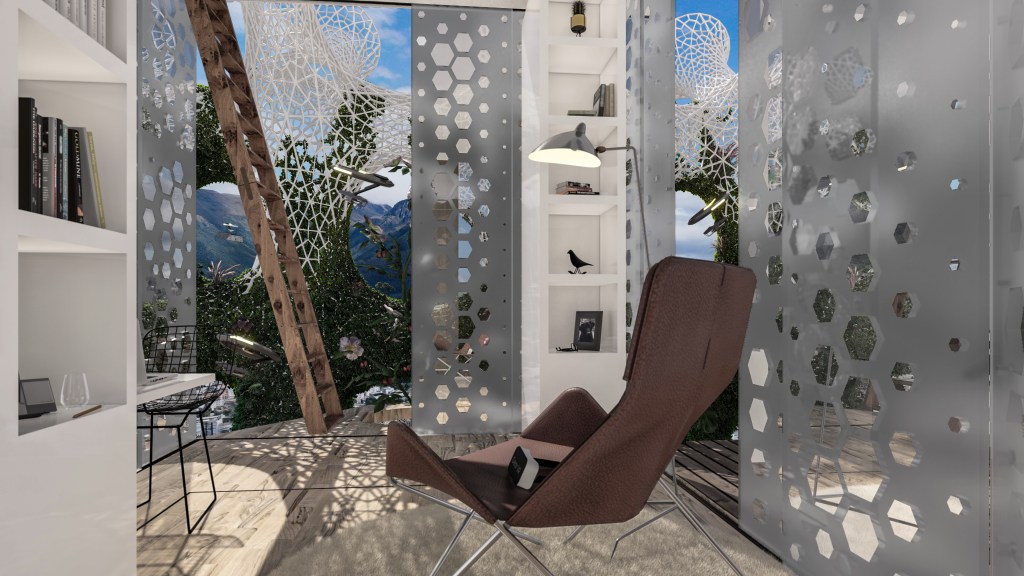


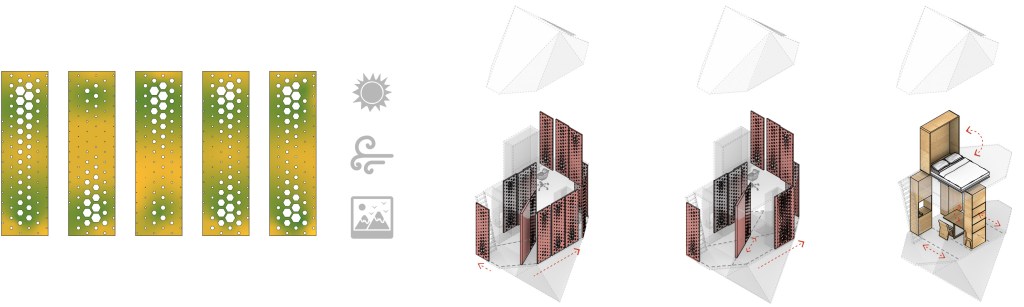


The proposal for adaptability is founded in the volatility of our setting. Hence to think of resiliency, one must design to adapt. To achieve this, replicable modules are used to create flexible living quarters.These are independent both in construction and as structure, and can be inserted into existing buildings to create inclusive communities. This module is built to enable and proliferate networks of green houses and vegetation throughout the city. Moveable panels and built-ins in the living quarters adapt to existing apartments and homes, they allow for interior flexibility during domestic periods.Through the collection of data in a city app the modules and city adapt to change. Publically, the City of Mutuality is designed for change and adaptation, and thus urban furniture is flexible and allows for the orchestration of bike lanes and streets through rails, according to communal and pedestrian needs.
Our modern world is undeniably an unprecedented time. Yet, with unprecedented times come unprecedented opportunities. The challenges we face are catalysts for change; changes which urges the urban setting to adapt and revamp. The Pliant City, is not merely an urban environment, but a proposal for a set of strategies that embody the idea of a flexible, adaptable and resilient city.
 J S C
J S C 