autumn 2020 – The Oslo School of Architecture and Design

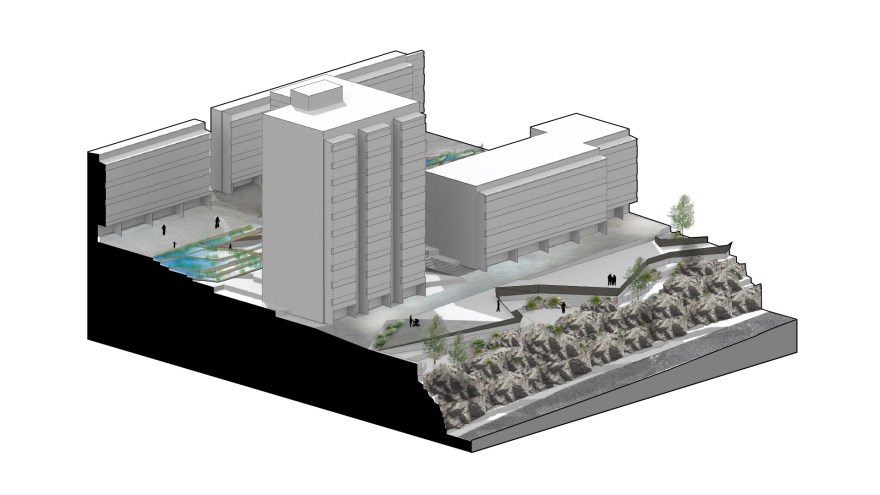
The neighborhoods of Haugerud and Trosterud are at the edge of the urban fabric of the city of Oslo. They are demarcated by dominant edges, the Alna river, the Oslo rift and the forest Øst Marka. This old farm land now houses a generic and functionalist suburb with extensive asphalt surfaces and green deserts. Nonetheless the edge layers found in the area possess great potential which is absent from the current landscape found on the site.
The design proposal aims at canalizing the potentials found in the site to construct a landscape that fosters connectivity and identity. The site of Trosterud is chosen as the main focus of intervention given it’s layers of challenges that are utilized as potentials in the design strategy. The site has large extensions of underutilized parking spaces and service underpasses that cause severe flooding at the T-bane station with high rain. These underused spaces hence have insecurity problems. Nonetheless the site has a privileged elevation which frames views of the hills and markas surrounding the city.
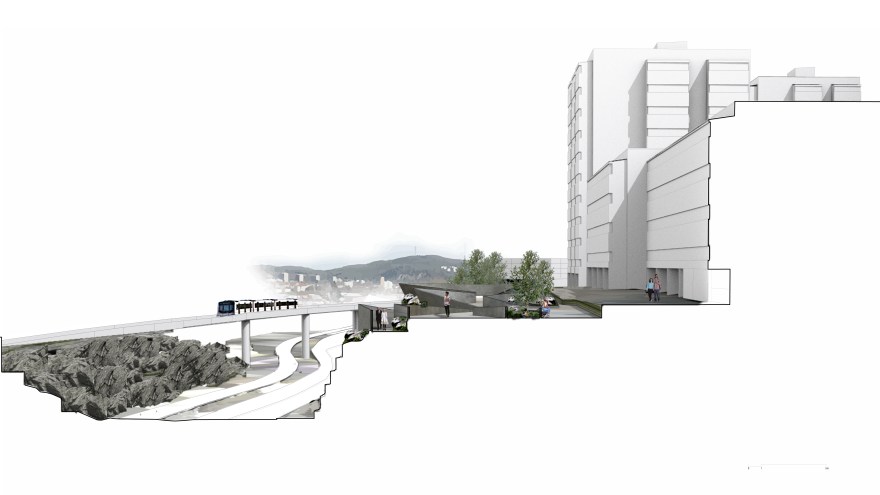
The proposal focuses on 3 main edges, the belvedere rock, the rain garden and the production history edge. The belvedere rock edge opens up the asphalt to shine a light on the unique geology of the site and open up the views to the city. The rain garden aims at storm water retention and the creation of a wetland ecosystem to improve the now green dessert found in between the two rows of buildings. Finally, the last edge focuses on the farming history of the site and the demand for allotment gardens. The proposal uses landscape as a tool for identity and connection but also as a response to storm water flooring and soil suffocation.
 J S C
J S C 